


 MENU
MENU


Bill Evans: Musical Landscapes at 33 RPM

Bill Evans is not just a pianist he is an entire atmosphere. With the sensitivity of a poet and the virtuosity of an artist, he managed to carve out a path in jazz that blends introspection, lyricism, and a timeless musical aesthetic. From his very first note to his final recording, Evans created musical moments that are not merely heard they are experienced.
By employing refined harmonies and polyphonic phrases, he managed to create a musical atmosphere that combined intensity with tranquility, originality with tradition. For vinyl lovers and seekers of authentic sound, his records are more than just recordings, they are fragments of a more thoughtful, more meaningful way of living. That’s because they carry something of the silence between the notes and the soul of a musician who doesn’t rush to impress, but rather to move you.
In this article, we present some of Bill Evans’ most iconic vinyl records, from the legendary live recordings at the Village Vanguard to his elegant collaborations with Jim Hall, and recently unearthed live gems (such as In Norway, recorded in 1966 and released only in 2024). Whether you’re a collector or simply searching for the perfect sound for your quiet, creative jazz hours, these albums deserve a spot next to your turntable.

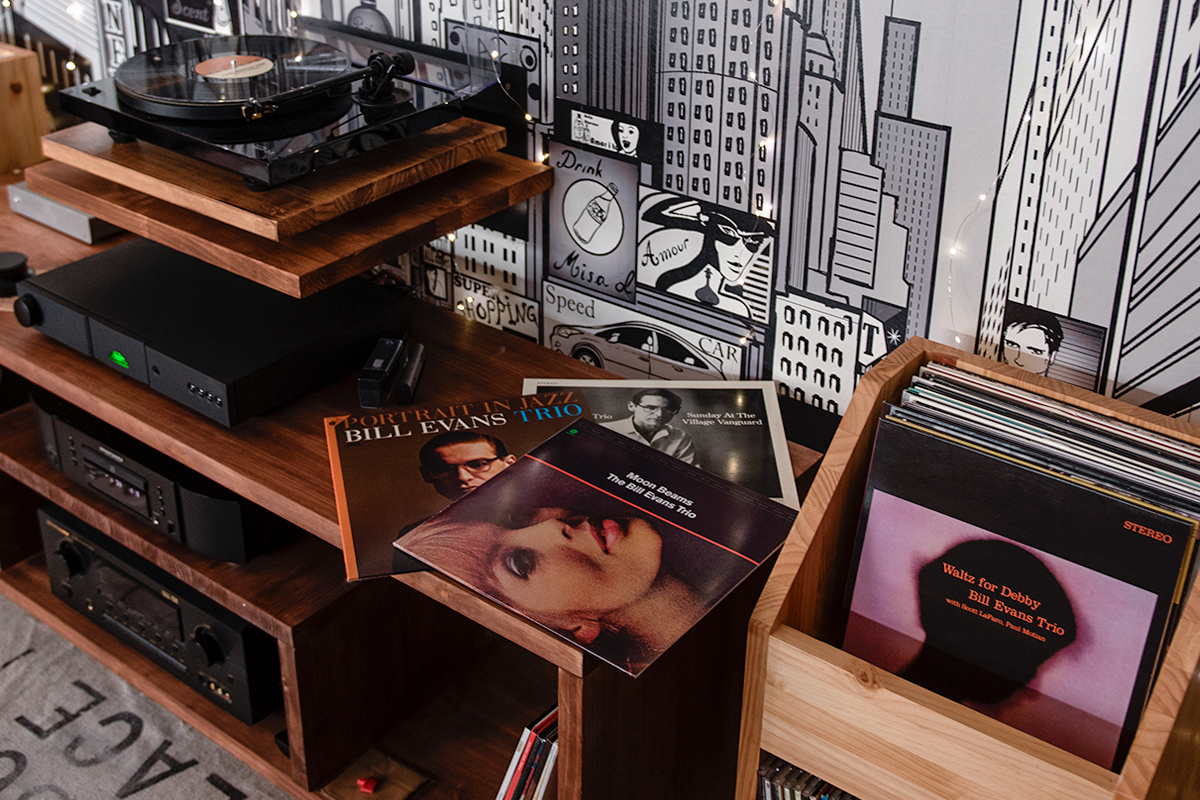
Sunday at the Village Vanguard (1961) Riverside Records
One of the most iconic live albums in jazz history and at the same time, a hymn to Bill Evans’ trio with Scott LaFaro (double bass) and Paul Motian (drums). The recording took place just days before LaFaro’s tragic death* and is a masterpiece of interplay, emotional intensity, and interpretive nuance.
*Despite his short career and his death at just 25 years old, Scott LaFaro remains one of the most influential bassists in jazz history. Bass Player magazine ranked him 16th on their list of the 100 greatest bass players of all time. LaFaro died in a car accident on July 6, 1961, in Seneca, New York.
The Village Vanguard is a jazz club located on South 7th Avenue in New York City’s Greenwich Village. It opened on February 22, 1935, by Max Gordon (an American jazz concert promoter). Initially, the club featured folk music and beat poetry*, but from 1957 onward, it became an exclusively jazz venue. Since then, it has hosted countless jazz legends and is now considered the oldest continually operating jazz club in New York!
*The term “Beat Generation” refers to a literary movement that emerged in North America during the 1950s and 1960s. Though it was a relatively small group, its influence on American literature and culture was significant enough to define an artistic generation.
A vinyl essential, as the analog warmth brings out the quality of Evans’ piano and the organic “conversation” with the double bass. In the background the vinyl listener can feel the life of the small club flowing. Gentle sounds of clinking glasses, cutlery meeting plates, scattered conversations, all set an authentic, almost cinematic soundscape… It’s Bill Evans’ music and the pulse of the Village Vanguard in perfect harmony with the warmth of moments filled with music. Magical!
Waltz for Debby (1961) Riverside Records
The follow-up to Sunday at the Village Vanguard, with recordings from the same legendary live performance. This album features the iconic composition Waltz for Debby, dedicated to Evans’ niece a touching, lyrical rendition that has become a classic.
On vinyl, the nostalgic and dreamlike atmosphere of the emotions truly shines. The depth of the sound and the natural dynamics of the piano bring the listener closer to Evans’ world, once again, in an almost cinematic setting. Outstanding!

Portrait in Jazz (1959) Riverside Records
One of Evans’ most dynamic and groundbreaking albums, featuring for the first time his legendary trio with LaFaro and Motian. The album balances intense improvisation with emotional sensitivity. It’s not just a “portrait” of jazz, but an inner X-ray of Bill Evans’ soul and with it, a new aesthetic is born.
Here, roles disappear; piano, bass, and drums converse as equals, in a continuous motion between fire and silence. Autumn Leaves becomes poetry, Blue in Green turns into a whisper that vanishes into the night. An album where every note isn’t played, it breathes.
Portrait in Jazz is full of energy and subtle sonic detail. The warmth of vinyl enhances the natural quality of the acoustic instruments and delivers a rich, immersive experience. The piano playing is unparalleled, around 1960, one might argue he was the best jazz pianist in the world. Still, what truly gives this album its enduring value is the unbroken musical unity flowing through every track. With each interpretation, the Bill Evans Trio proves that subtle interplay works best in small ensembles, and that innovation doesn’t need to shout. Awesome!
Moon Beams (1962) Riverside Records
Evans’ first album following the tragic death of bassist Scott LaFaro, a loss that left a deep mark on both the artist and his music. With new bassist Chuck Israels, Evans returns with a more introspective, lyrical, and darker sound, offering a deeply moving musical confession, full of sensitivity and rare emotional clarity.
The album radiates a quiet melancholy, while its delicate dynamics and expressive intimacy truly “breathe” on vinyl. The sound of the piano gains an immediacy and warmth that is hard to replicate digitally, offering an almost tactile listening experience.
Among the album’s standout moments are the deeply lyrical “Re: Person I Knew” tribute to producer Orrin Keepnews and the melancholic rendition of “Polka Dots and Moonbeams,” which beautifully captures the subtlety and sense of loss that runs through the entire record. A landmark work from a transitional period in Evans’ life, showing how grief can be transformed into pure, genuine beauty!
You Must Believe in Spring (1977) Warner Bros. Records
Recorded just a few years before his death, this album is more melancholic and reflective. It stands out for its arrangements and Evans’ introspective performance, which exudes maturity and emotional clarity.
The production is excellent, with flawless, transparent sonic balance. On vinyl, the textures and nuances of the piano are revealed with such clarity that the experience becomes almost meditative. A must-have album for quiet, deeply personal listening!
In Norway: The Kongsberg Concert (2024) (recorded 1966) Elemental Music / Resonance Records
An unreleased-for-decades recording from the Kongsberg Jazz Festival in Norway, featuring Bill Evans in one of his most inspired live performances. The trio includes Eddie Gómez (bass) and Alex Riel (drums), a rare lineup that offers a fresh, dynamic approach.
The transfer from the original recording to analog vinyl was done with respect and high-quality mastering. The vinyl brings the atmosphere of that night to life with stunning clarity and energy, placing the listener right inside the concert hall, almost as if they were there. A collector’s release that is already considered a must-have!
Undercurrent (1962) – Bill Evans & Jim Hall United Artists / Blue Note
Undercurrent is a timeless and uniquely atmospheric album, the result of a collaboration between two jazz giants: pianist Bill Evans and guitarist Jim Hall. Released in 1962 by United Artists (and later reissued by Blue Note), the album is characterized by deep lyricism, harmonic subtlety, and emotional richness. Sonically, Undercurrent is a conversation between two extraordinarily sensitive and creative musicians who explore the dynamics of space and silence as much as those of notes.
It’s an album that offers an almost chamber-like listening experience, as the sound is intimate, immediate, and close—like the musicians are in the room with you, playing live right in front of you. Every tiny detail is clearly audible: the breath, the touch of the fingers on the keys, the creak of the guitar strings, the stillness between the notes. A perfect vinyl record, delivering all the depth and warmth that analog listening can offer!
The album’s cover is also worth mentioning. It features a haunting image by photographer Toni Frissell*, showing a woman floating in water, a visual reflection of the album’s subterranean calm and lyrical flow. It is considered one of her most iconic photographs.
*Toni Frissell (Antoinette Frissell Bacon, 1907–1988) was a pioneering American photographer, known for her innovative work in fashion photography, her World War II documentary images, and her portraits of both famous and everyday people. She began her career in the 1930s as a fashion photographer for Vogue magazine, but soon moved away from studio settings, choosing instead to shoot models in natural environments, bringing a fresh, spontaneous aesthetic to the genre.

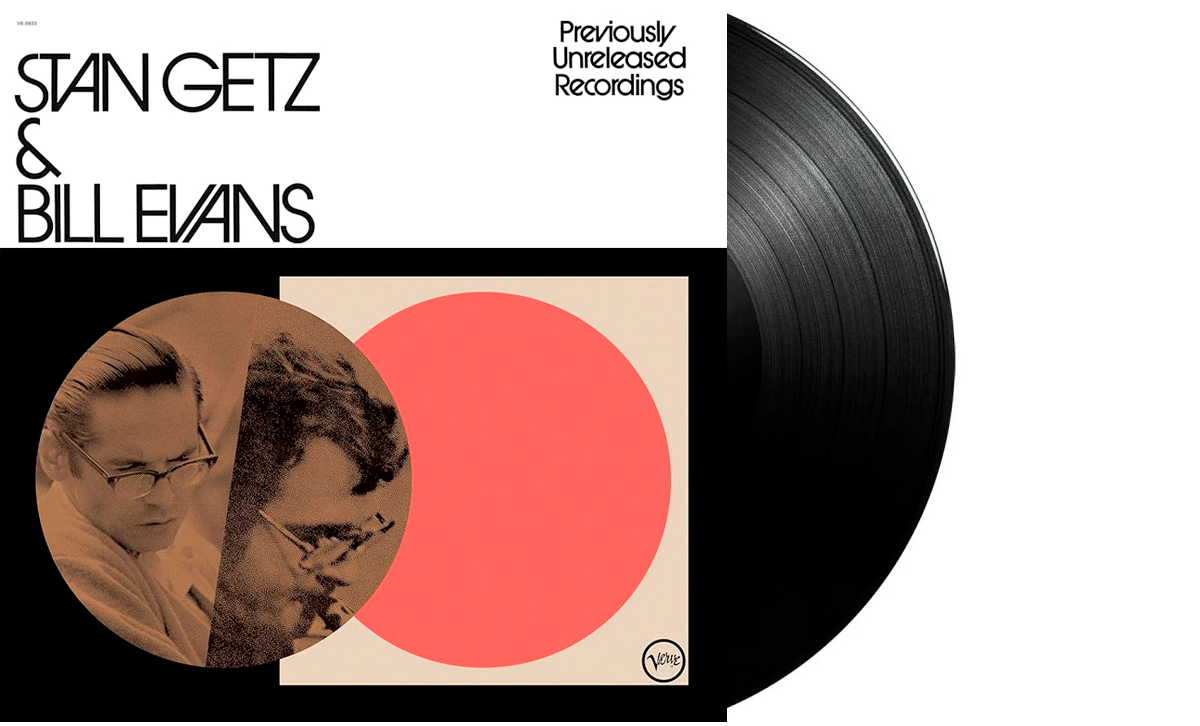
Stan Getz & Bill Evans (1974) Verve Records
Hidden gem...
There are moments in Bill Evans’ discography that were never meant to be heard at least, not at the time. The recordings with Stan Getz, eventually released in 1974 by Verve Records as Previously Unreleased Recordings, belong precisely to that category.
And yet, the music takes us back to the early 1960s. A period in which Evans was already shaping that singular, inward musical language, one that relied not on intensity, but on nuance and space. There is no “perfection” here in the conventional sense of a studio album. Instead, there is something rarer: the feeling of a moment before it fully takes form. Evans does not simply accompany he listens, intently. And Getz responds with that unmistakable, almost weightless phrasing of his.
Perhaps this is why these recordings do not sound like artefacts of the past, but rather like a revelation that arrived later than it should have. As if we are being given the chance to hear not only the music, but the process behind it.
His real name was William John Evans (August 16, 1929 – September 15, 1980). Born in Plainfield, New Jersey, he studied classical music at Southeastern Louisiana College and at the Mannes School of Music in New York City, where he specialized in composition and earned an artist diploma. In 1955, he moved to New York, where he collaborated with conductor and theorist George Russell. In 1958, he joined Miles Davis’s quintet, with which during a period of exploring modal jazz they recorded Kind of Blue in 1959, the best-selling jazz album of all time. From the late 1959 onward,, he pursued a career primarily as the leader of his own trio. His use of impressionist harmony, block chords, innovative chord voicings, as well as his trademark melodically “singing” lines with rhythmic independence, continue to influence jazz pianists to this day.
Happy listening!
Article Editor: Giannis Stamou
AthensProAudio Team ©
Recent Articles
-
![AWOL Vision Aetherion MAX - Real cinema display!]()
AWOL Vision Aetherion MAX - Real cinema display!
-
![Cartridge or Phono Stage: Which Should You Upgrade First!]()
Cartridge or Phono Stage: Which Should You Upgrade First!
-
![Focal Diva Alta Utopia – When High-End Audio Stops Being Complicated.]()
Focal Diva Alta Utopia – When High-End Audio Stops Being Complicated.
-
![Leica Cine Compact 1 - A New Level of Freedom in Home Cinema.]()
Leica Cine Compact 1 - A New Level of Freedom in Home Cinema.
-
![Focal Mu-so Hekla – The new era of all-in-one sound by Focal & Naim.]()
Focal Mu-so Hekla – The new era of all-in-one sound by Focal & Naim.
-
![Audeze Maxwell 2 – High-Fidelity Sound in Gaming]()
Audeze Maxwell 2 – High-Fidelity Sound in Gaming
-
![7+1 smart ways to truly upgrade your sound.]()
7+1 smart ways to truly upgrade your sound.
-
![Neumann M 50 – From the 20th Century to the Present Day.]()
Neumann M 50 – From the 20th Century to the Present Day.
-
![Fender Studio Pro: The Next Day of Studio One Is Here!]()
Fender Studio Pro: The Next Day of Studio One Is Here!
-
![Naim New Classic 300 Series - Redefining Your Very Own Legacy.]()
Naim New Classic 300 Series - Redefining Your Very Own Legacy.
-
![HiFi Rose RS130 - The Art of Digital Sound!]()
HiFi Rose RS130 - The Art of Digital Sound!
-
![Open Day - Christmas Dream of Sound | Focal Powered by Naim Athens!]()
Open Day - Christmas Dream of Sound | Focal Powered by Naim Athens!


Follow us on Social Media
Don't miss out on new products and events by Athens Pro Audio.




