


 MENU
MENU


HiFi Rose RS130 - The Art of Digital Sound!

A brand that no longer needs much of an introduction, South Korean HiFi Rose is the latest chapter in a technological story that began back in 1968, with CI Tech Co., Ltd. Over decades of designing industrial IT systems, advanced touch interfaces and digital high‑fidelity solutions, the company built the know‑how that would eventually give birth to the HiFi Rose brand in 2017. Since 2018–2019, HiFi Rose has moved decisively into the Hi‑Fi and high‑end arena, quickly establishing itself as a reference in digital music players and in the design of state‑of‑the‑art Class‑D amplifiers using GaN FET technology.
In this article, the focus is on the RS130 network transport – one of the most talked‑about products in its category right now, and for very good reason.
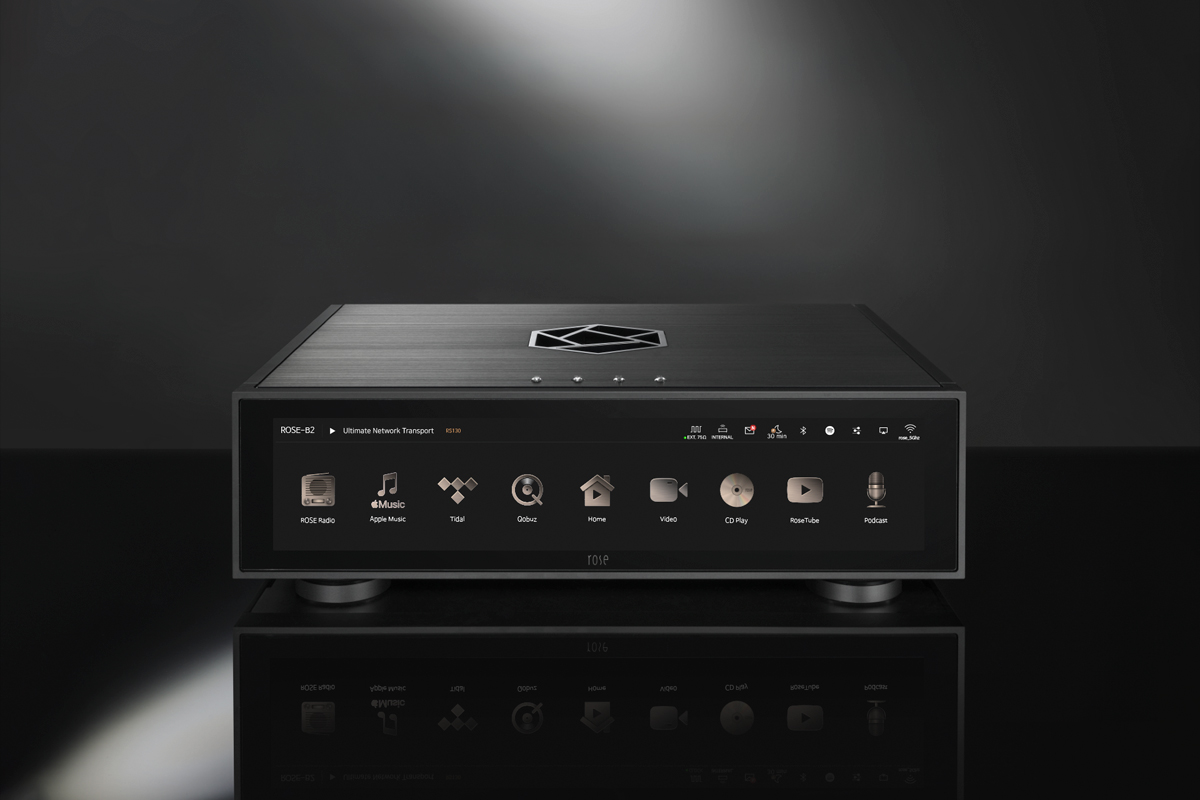
Network transport vs streamer
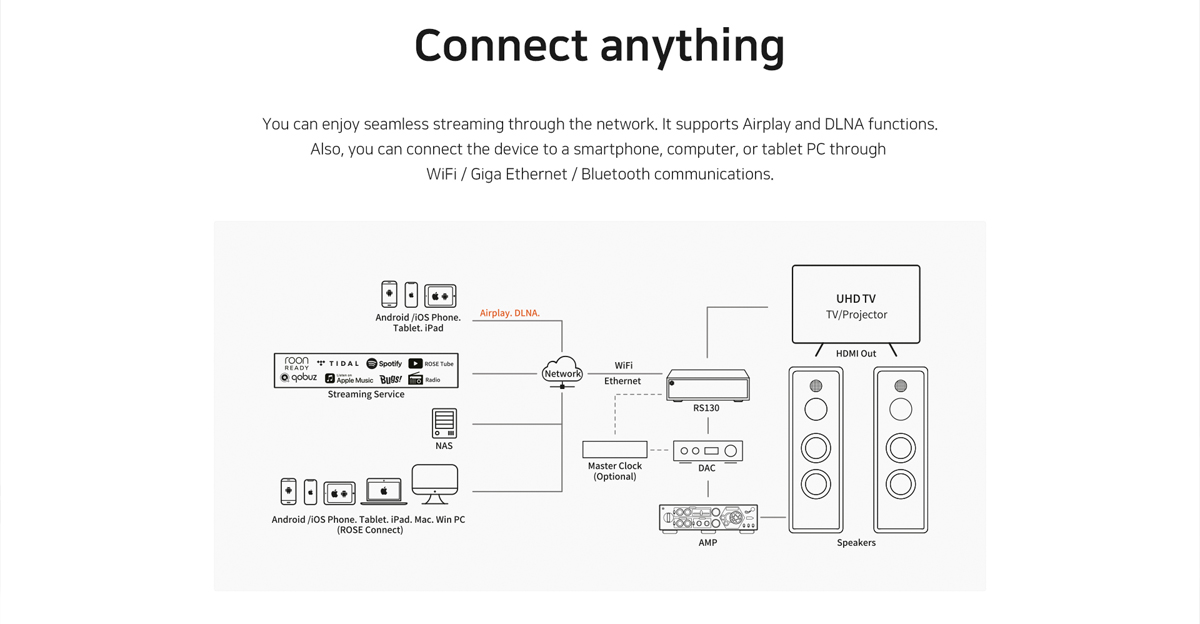
HiFi Rose describes the RS130 as a “network transport” rather than a streamer. In the company’s vocabulary, a streamer combines network transport and DAC functions in a single chassis, while a network transport is a dedicated digital source designed to hand off the signal to an external DAC. It is a subtle but important distinction, and it underpins the entire design philosophy of the RS130.
Η φιλοσοφία πίσω από το RS130
The RS130 is not a digital box that reveals its character only through a spec sheet. From the first hours of use it becomes clear that this is a machine built for real‑world, everyday listening: it responds quickly, behaves impeccably on the network and presents a user interface that enhances the listening ritual instead of getting in the way. It is not trying to draw attention to itself – it is trying to step out of the way so the listener can focus entirely on the music.
He uses an internal computing platform to retrieve and process music files from streaming services or from digital libraries stored on a NAS or USB drive, and then hands off the digital signal to an external DAC. The idea of separating functions is nothing new in audio: just as with the other discrete components in a hi‑fi system, isolating the “noisy” computing stage from the sensitive analogue circuitry of a DAC makes perfect sense. This is one of the reasons why the RS130 sits among the more expensive network transports on the market today – and why its overall build quality goes a long way towards justifying its price.
As has already become clear in recent years, DACs can have a dramatic impact on the quality of digital playback. The question that remains is whether a network transport at this price level can truly justify its existence. With so many competitors at lower price points and with every new generation of products bringing impressive technological advances, the role of such costly transports could easily be seen as questionable – or at least controversial. That is, until HiFi Rose introduced the RS130.
What makes the HiFi Rose RS130 so special?
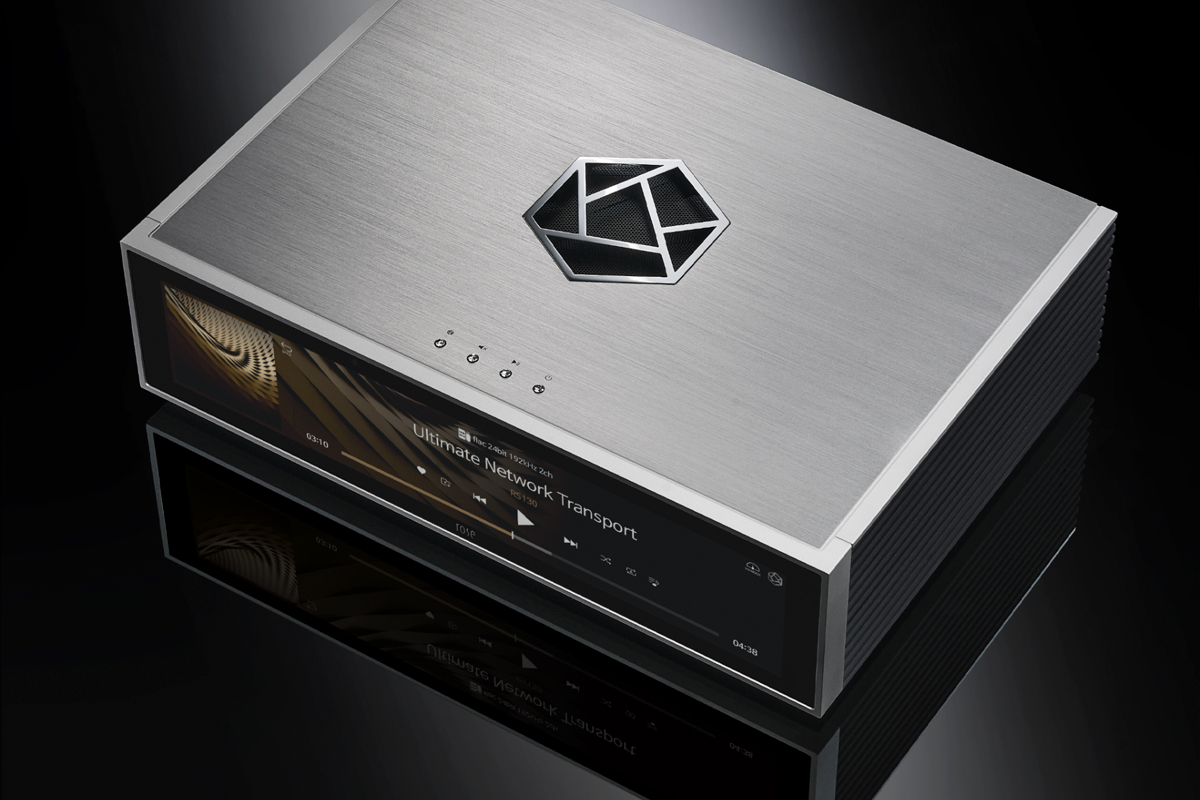
The design brief is clear: deliver an exceptionally transparent sound with vanishingly low digital noise, wrapped in a beautifully executed piece of industrial design. Many manufacturers make similar promises; HiFi Rose pushes the concept a step further. Here is how – and why.
- Solid, machined aluminium chassis that controls vibration and physically separates the power supply from the output stages.
- Smart ventilation path (shaped like the HiFi Rose logo) to manage airflow discreetly.
- Four crystalline control buttons on the top panel for direct access to key functions.
- Exceptional fit and finish that looks and feels truly high‑end.
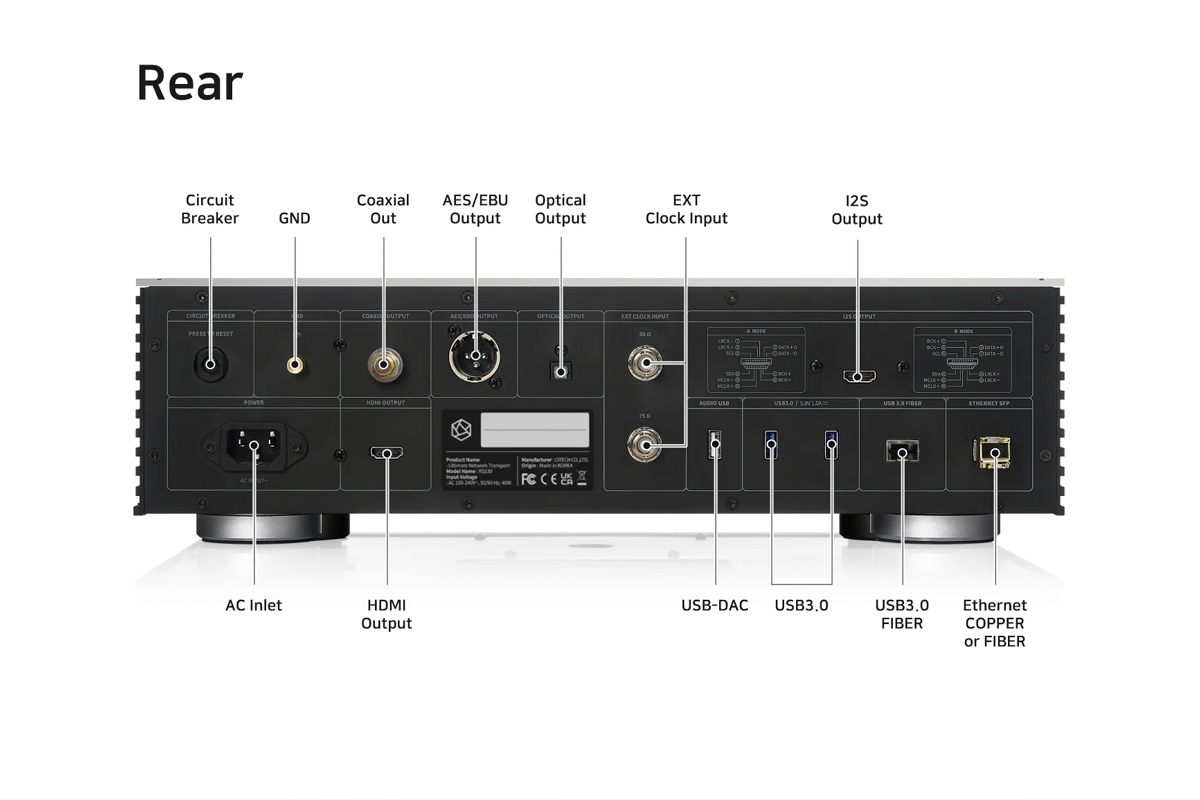
- Use of optical fibre both on the Ethernet input and on the USB 3.0 fibre output for maximum isolation from incoming and outgoing noise.
- Full range of digital outputs: I2S, USB, AES/EBU, coaxial (RCA), Toslink and HDMI.
- Support for higher bit rates and sampling frequencies than typical network transports in its class.
- Flexible PCM and DSD processing options: DSD Native, DSD over PCM and DSD‑to‑PCM conversion.
- HDMI output that can carry both audio and on‑screen information such as album artwork and track data.
- Low‑noise linear power supply combined with a supercapacitor‑based UPS stage that behaves like a quiet battery.
- 256 MB SSD cache for stable playback, instead of relying solely on buffering or mechanical drives.
- OCXO (oven‑controlled crystal oscillator) master clock with exceptionally low jitter.
- External master clock input for tight synchronisation with a compatible DAC or clock source.
- Software‑based volume control, allowing operation without a separate preamplifier if desired.
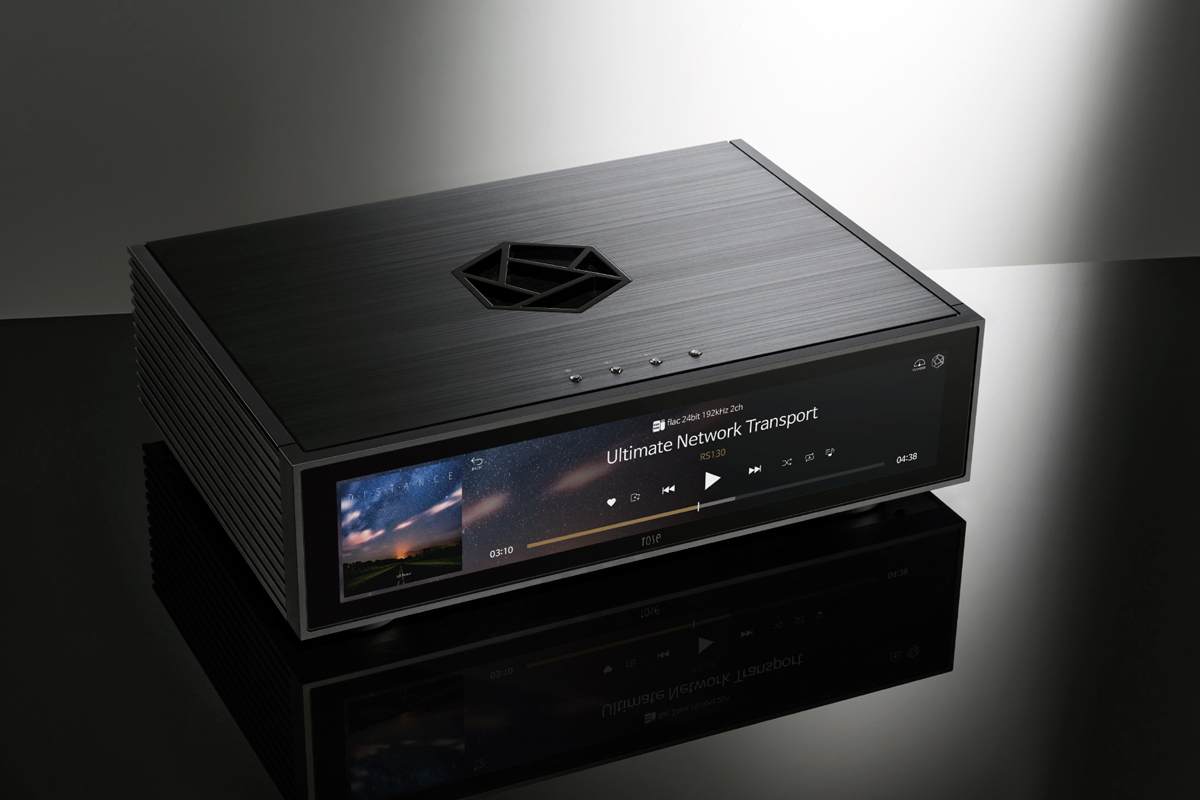
- Full‑width component with a 15.4‑inch TFT LCD capacitive touchscreen covering the entire front panel.
- Dual VU meter display options with different colour themes for a more “analogue” visual feel.
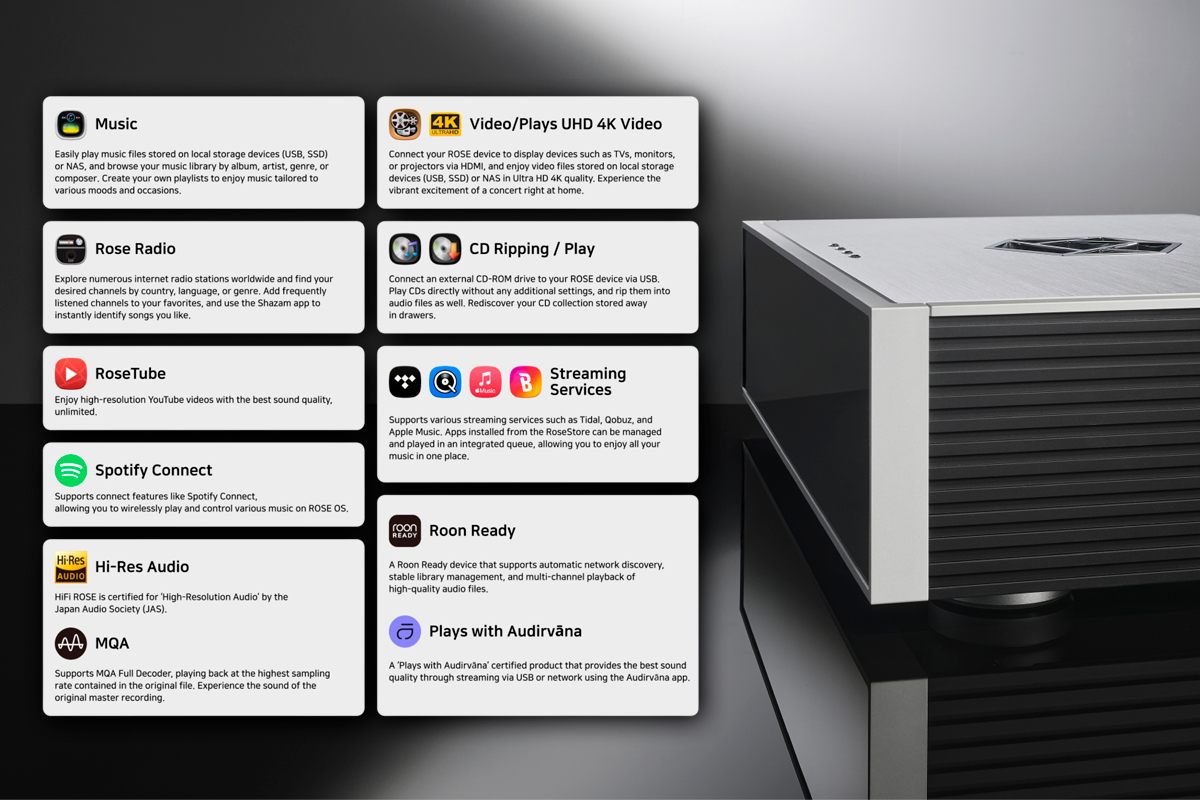
- Support for Spotify Connect.
- Rose Connect control app with native integration of Tidal, Qobuz, Apple Music, Bugs, Rose Tube and Internet Radio (native Apple Music integration without relying solely on AirPlay is still rare).
- AirPlay, DLNA and Roon Ready certification for flexible integration into modern streaming ecosystems.
- Internal SSD slot supporting drives up to 4 TB for local music storage.
- Supplied with a high‑quality remote control for couch‑friendly operation.
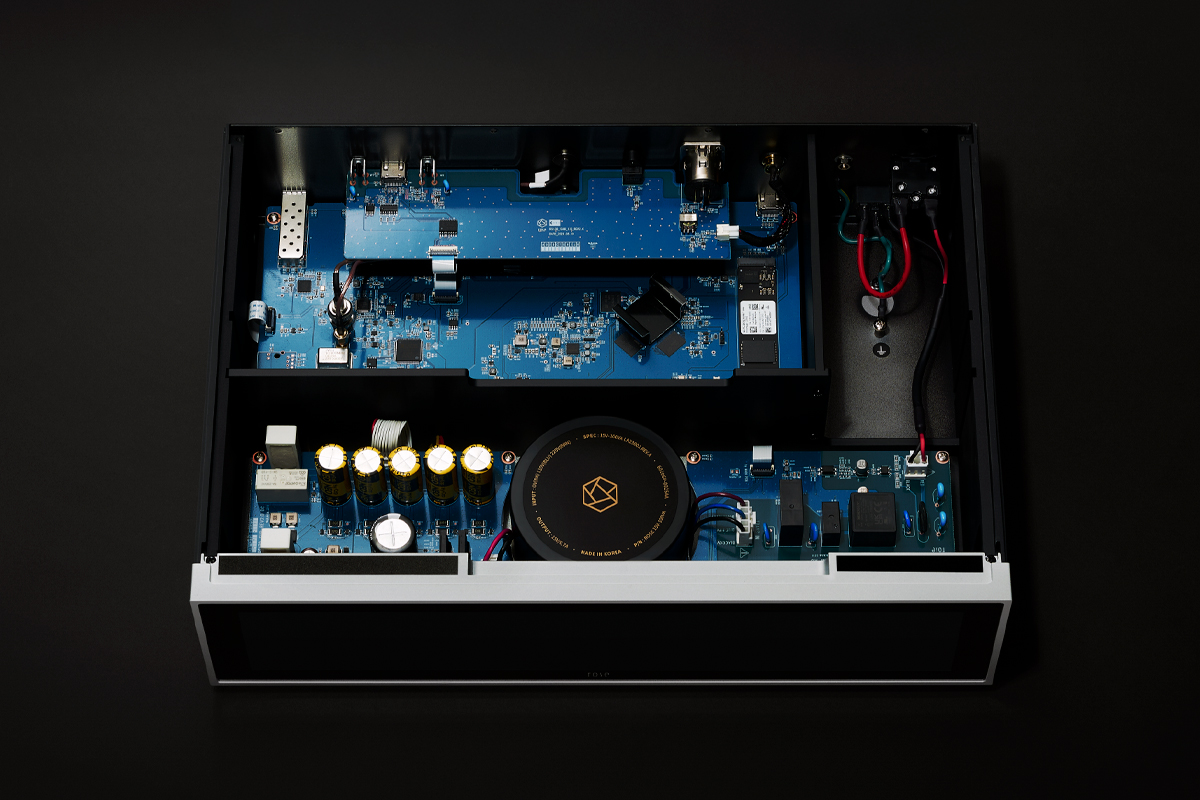
Network & Fibre Optics
Fibre-optic Ethernet support is not merely a technological flourish, but a practical solution to one of the most common issues in modern audio systems: digital noise originating from the home network. In real-world conditions — particularly in environments with routers, NAS units and multiple connected devices — the RS130 achieves remarkable isolation, resulting in a quieter background, more precise stereo imaging and increased transparency at low listening levels.
OCXO Clock & Listening Fatigue
The presence of an OCXO clock in the RS130 is not intended to add sonic “spectacle”, but to ensure accuracy and timing stability. In practice, this translates into a more natural musical flow and a sense of coherence that becomes especially apparent during long listening sessions. The result is reduced digital fatigue and a listening experience that remains engaging even with demanding high-resolution material.
With challenging recordings — such as small jazz ensembles, voice-and-piano performances or productions with strong dynamic contrasts — the RS130 clearly reveals its character. Stereo imaging becomes more stable, micro-dynamics emerge organically, and the music maintains its coherence even at low playback levels — a quality particularly appreciated during extended listening sessions.
Despite its impressive capabilities, it would be unfair to suggest that the RS130 aims to impress through exaggerated hi-fi effects. Its strength lies elsewhere: in stability, low digital noise, spatial accuracy and, above all, precise timing.
And what better way to explore these qualities than simply to listen? With recordings such as “My Foolish Heart” by the Bill Evans Trio or “River Man” by Nick Drake, it quickly becomes evident that the music is not being pushed forward — it is allowed to breathe, naturally and effortlessly. The silence between notes, the natural decay of instruments and the purity of the background reveal a digital front-end that operates with restraint and maturity. Even in more complex productions — such as “Everything In Its Right Place” by Radiohead or “On the Nature of Daylight” by Max Richter — the RS130 maintains coherence and control without sacrificing the emotional continuity of the music.
The true test, however, comes with voices. While the accompanying Naim electronics and Focal Sopra loudspeakers in the Athens Pro Audio demo room undoubtedly elevate the result, the RS130 itself deserves credit for following the system’s pace with remarkable rhythmic precision. Performances by Dinah Washington and Etta James serve as exemplary references. In “What a Diff’rence a Day Makes” and “At Last”, any trace of digital hardness is immediately softened — and it is precisely here that the RS130, in combination with the rest of the system, demonstrates its true value. Vocals stand forward with presence, texture and micro-dynamic nuance, free from excess or fatigue. In “I’d Rather Go Blind”, Etta James sounds immediate, vulnerable and utterly real, with the silence between phrases carrying almost as much weight as the notes themselves. It is at this moment that one realises: when streaming is implemented properly, it ceases to be merely convenient and becomes a true reference-level listening experience
Compared with a typical mid- to upper-tier all-in-one streamer, the RS130 makes no attempt to impose a sonic signature of its own. Rather than smoothing, sweetening or “polishing” the presentation, it steps aside and allows the DAC and the rest of the system to do their work unimpeded. Where integrated designs can subtly constrain the soundstage and gently blur micro-dynamic detail, the RS130 maintains temporal precision and an impressively low noise floor, making fine vocal inflections and instrumental shading easier to follow.
For listeners upgrading from a basic network player or a compact streamer with an onboard DAC, the difference is most apparent in the way the music coheres. Bass lines gain definition and control, the midband remains composed during more demanding passages, and the treble sheds the slight digital edge that can become tiring over longer sessions. This is not a component that seeks to impress in the first few minutes; instead, it reveals its strengths gradually, encouraging extended listening and a deeper engagement with the music over time.
Why Choose the RS130
When a network transport elevates streaming to a higher level — not only in sonic performance but also in industrial design — while offering every conceivable digital output, extensive processing control, a reference-grade power supply, impeccable build quality and, of course, HiFi Rose’s distinctive touchscreen interface, the rationale becomes self-evident. Are there more affordable alternatives? Undoubtedly. Will they offer the same breadth of functionality and the same level of refinement? That is far less certain. Ultimately, the answer depends on how revealing the rest of the system is and on how demanding the listener may be. If you are seriously considering the RS130, chances are you are already heading in the right direction. In any case, it establishes a new benchmark for what a dedicated network transport can achieve.
The RS130 is aimed squarely at listeners who have already invested in a high-quality DAC and are seeking maximum control and stability within the digital domain. This is not an all-in-one solution, but a specialised component for those who wish to eliminate the remaining uncertainties at the source and build a system that performs consistently and effortlessly in everyday use, without compromising clarity or transparency.
It should also be noted that the RS130 is not a necessity for every system. If the digital front end is relatively simple, the network infrastructure limited, and the DAC insufficiently revealing in terms of timing and noise-related differences, the improvements it offers may not be immediately apparent. The RS130 is clearly intended for high-performance systems, where attention to every detail in the digital signal path is not a luxury, but a prerequisite.
Final Thoughts
The market today includes a wide range of network transports, among them high-performance models such as the RS130. We approached its evaluation without taking its purchase cost into account, and ultimately realised that this particular streamer delivers outstanding value to an audio system relative to its performance level. In any case, beyond all other considerations, the RS130 sets a new benchmark, aimed at listeners who have already invested in a quality DAC and are seeking absolute control and stability within the digital chain.
* Class-D amplifiers operate using a switching principle rather than a linear one, unlike traditional Class-A or Class-AB designs.
** GaN (Gallium Nitride) is an advanced semiconductor material, significantly faster and more efficient than traditional silicon, used in the FETs (Field-Effect Transistors) of modern Class-D amplifiers. In simple terms, GaN FETs are the “switches” that open and close the signal inside the amplifier — and they do so at lightning speed.
AthensProAudio Team ©
Recent Articles
-
![AWOL Vision Aetherion MAX - Real cinema display!]()
AWOL Vision Aetherion MAX - Real cinema display!
-
![Cartridge or Phono Stage: Which Should You Upgrade First!]()
Cartridge or Phono Stage: Which Should You Upgrade First!
-
![Focal Diva Alta Utopia – When High-End Audio Stops Being Complicated.]()
Focal Diva Alta Utopia – When High-End Audio Stops Being Complicated.
-
![Leica Cine Compact 1 - A New Level of Freedom in Home Cinema.]()
Leica Cine Compact 1 - A New Level of Freedom in Home Cinema.
-
![Focal Mu-so Hekla – The new era of all-in-one sound by Focal & Naim.]()
Focal Mu-so Hekla – The new era of all-in-one sound by Focal & Naim.
-
![Audeze Maxwell 2 – High-Fidelity Sound in Gaming]()
Audeze Maxwell 2 – High-Fidelity Sound in Gaming
-
![7+1 smart ways to truly upgrade your sound.]()
7+1 smart ways to truly upgrade your sound.
-
![Neumann M 50 – From the 20th Century to the Present Day.]()
Neumann M 50 – From the 20th Century to the Present Day.
-
![Fender Studio Pro: The Next Day of Studio One Is Here!]()
Fender Studio Pro: The Next Day of Studio One Is Here!
-
![Naim New Classic 300 Series - Redefining Your Very Own Legacy.]()
Naim New Classic 300 Series - Redefining Your Very Own Legacy.
-
![HiFi Rose RS130 - The Art of Digital Sound!]()
HiFi Rose RS130 - The Art of Digital Sound!
-
![Open Day - Christmas Dream of Sound | Focal Powered by Naim Athens!]()
Open Day - Christmas Dream of Sound | Focal Powered by Naim Athens!


Follow us on Social Media
Don't miss out on new products and events by Athens Pro Audio.




