


 MENU
MENU


Studio Monitors: The Most Honest Mirror of Your Sound!

Studio monitors are not designed to sound beautiful — they’re built to tell the truth. They don’t flatter, they reveal. That’s precisely what makes them the most accurate reflection of your craft. Whether you’re composing, mixing, or mastering, a proper pair of studio monitors is the most honest investment you can make for your studio.
Because they play such a fundamental role in the mixing process, this is one area where compromise simply isn’t an option. Consumer hi-fi speakers that are “tuned to please” might make your tracks sound nice, but they won’t tell you what’s really going on. In this case, spending a little more means hearing a lot better. In this article, we’ll break down five essential tips to help you choose the monitors that best fit your workflow.
1. Accuracy Comes First — The Foundation of Every Mix
The role of a studio monitor is not to impress you, but to inform you. Its job is to deliver a flat, objective sound that exposes every strength and flaw of your mix. If a pair of speakers exaggerates the low end (as many consumer speakers do), your mix might end up thin and lifeless elsewhere. If they smooth out the highs too much, you risk pushing your mastering into harsh territory. That’s why models like the Yamaha HS5 have earned a reputation for brutal honesty. They “tell it like it is” — even when it hurts. For many, they’re the perfect starting point to truly understand how their mix actually translates beyond the studio walls.
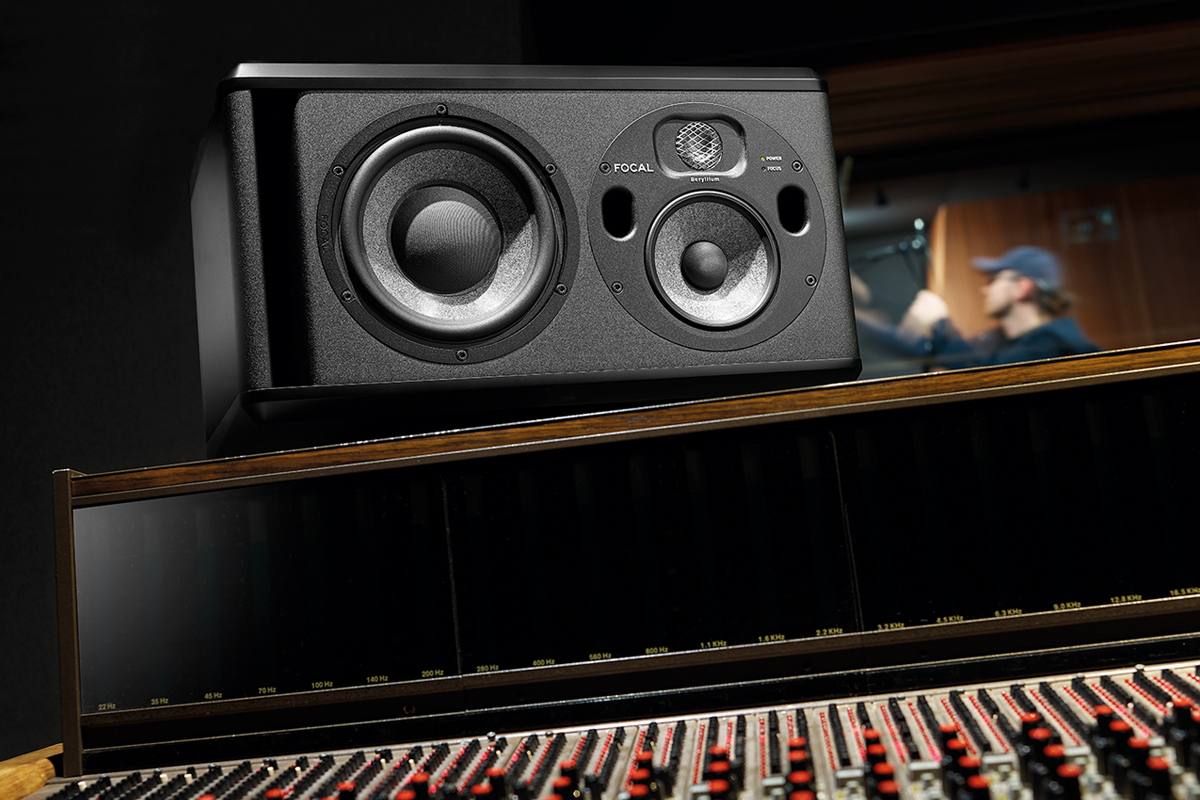
See all the active monitors here
2. The Right Size for Your Space
Beyond sound quality, size matters more than you think when it comes to choosing your studio monitors. There’s no point in spending extra on something larger or more powerful if your room can’t truly support it — you’ll only end up with exaggerated reflections and a distorted sense of balance.
For a typical home studio — roughly the size of a bedroom — nearfield monitors are usually the ideal choice. They’re designed for close listening, minimizing the impact of room acoustics. However, if you’re lucky enough to work in a larger room where you can sit at least 1.2–1.5 meters away from the speakers, midfield monitors can deliver a fuller, more expansive soundstage. Choosing the wrong size can give you a false image of your mix; choosing the right one ensures your sound translates consistently everywhere.
And don’t forget the finishing touches: a good pair of balanced cables for clean signal transfer, and sturdy monitor stands that position your speakers at ear height. These seemingly small details can make a major difference in accuracy.
Don’t underestimate the role of your audio interface — the converter truly makes the difference
Studio monitors can be exceptional, but if your audio source isn’t clean, you will never hear their full potential. This is where the quality of the converter (DAC/ADC) inside your audio interface becomes crucial.
A good converter offers:
• cleaner, more transparent sound
• better stereo imaging
• lower noise and distortion
• more accurate translation of your mix to the monitors
With an entry-level audio interface, your monitors may reveal a “tight” or muddy sound that isn’t caused by the speakers themselves, but by the poor quality of the source. A reliable audio interface ensures you hear the truth of your mix — not the limitations of your hardware.
See all USB & Thunderbolt audio interfaces for Home Studio, and our Mid-Level & Pro Audio Interfaces
Browse all audio interfaces here
Recommended setups:
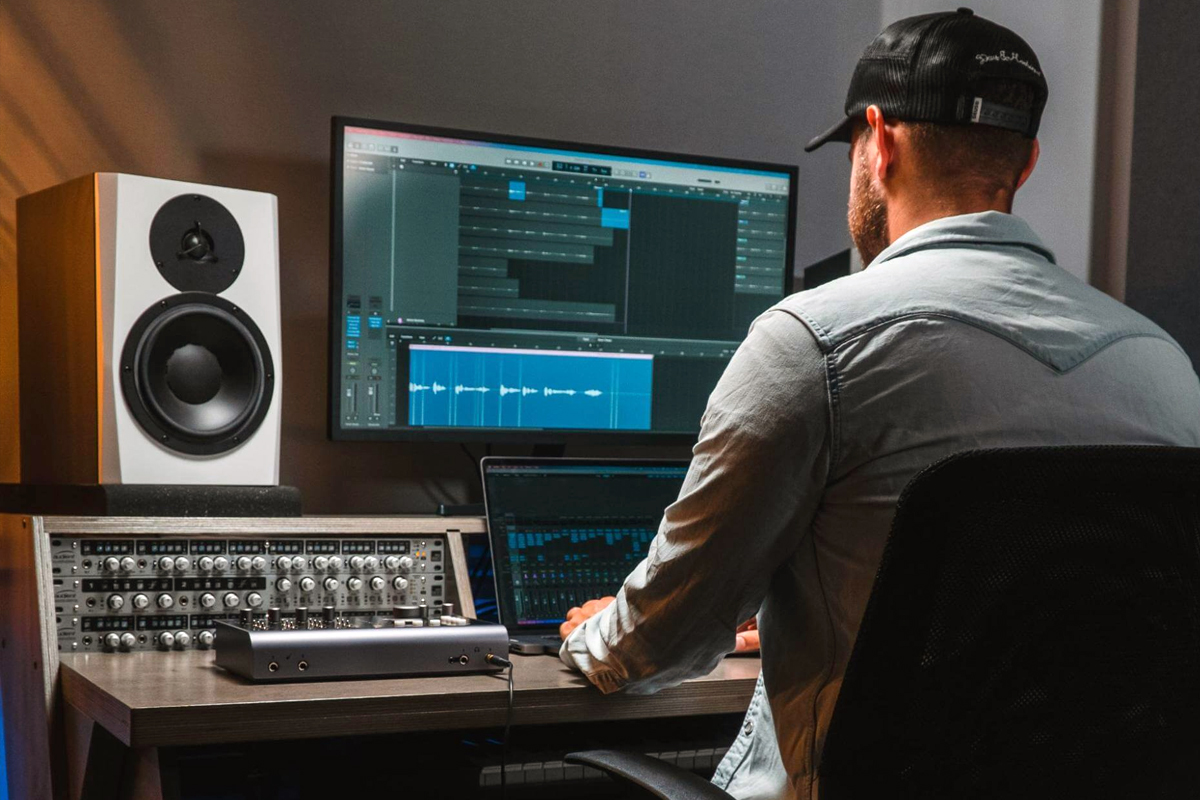
- For a 10–15 m² home studio, a 5"–6" monitor (e.g., KRK Rokit RP5 G4, PreSonus Eris E5 XT) usually strikes the perfect balance.
- For larger rooms or bass-heavy genres like EDM, hip-hop, or cinematic scoring, consider 8" monitors such as the Adam T8V, or add a dedicated subwoofer like the Focal Sub One for a more complete low-end extension.
3. Low Frequencies — The Most Elusive Element
When choosing studio monitors, one of the most critical — and often misunderstood — aspects is the bass reflex system. This design uses the energy of the air inside the cabinet to enhance low-frequency performance, improving efficiency while reducing distortion. In essence, it’s what allows compact monitors to deliver deeper, more natural bass.
There are three main types of bass reflex configurations:
- Front-Ported: The port is located on the front of the speaker. This layout works best when monitors are placed close to walls or in smaller rooms, as it minimizes acoustic reflections from the rear wall. The result? A more direct, controlled bass response in tight spaces.
- Rear-Ported: Here, the port sits on the back panel, allowing for a richer, more extended low end. However, it demands breathing room — if placed too close to a wall, reflections can create unwanted resonances and color the sound. Think of these as the choice for studios with space to spare.
- Passive Radiator: Instead of a port, an additional passive diaphragm vibrates in sync with the main driver. This offers the benefits of a bass reflex design without the turbulence or “port noise.” It’s a clever solution for compact monitors, particularly in setups where wall proximity is unavoidable. Bass, ultimately, is the hardest element to get right. If your monitors inflate it, you’ll end up cutting too much. If they understate it, you’ll overcompensate. What you need is realism — bass that’s honest, not hyped.
Recommendations:
- For quieter genres like jazz, folk, or indie, 5"–6" nearfields (e.g., Focal Alpha 65 Evo) will serve you perfectly.
- For more demanding styles — trap, techno, film scoring — a subwoofer with proper placement is essential. Brands like Focal and Genelec offer exceptional subs designed to integrate seamlessly with their monitor ranges.
And remember: a subwoofer isn’t there to impress — it’s there to reveal what’s really happening below 50Hz.
4. Learn Your Monitors — The Key to Trust
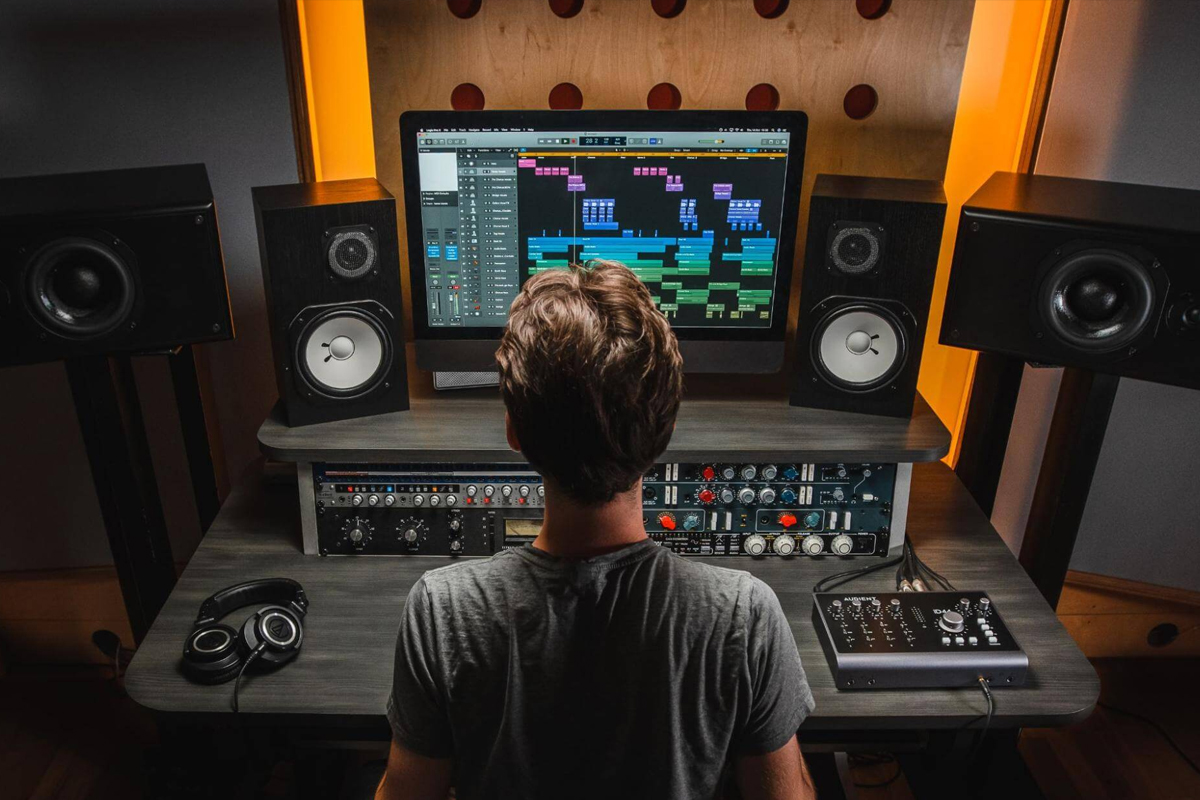
Even the best pair of studio monitors won’t perform to its potential unless you learn how to listen to them. Build a reference playlist with tracks you know intimately — from jazz and classical to pop and electronica. Play them through your monitors, then compare what you hear against other systems: headphones, consumer speakers, even your car audio. This simple exercise will help you understand how your monitors “translate” sound in the real world.
Take the Neumann KH 150, for instance. Its precision is surgical — every detail, every transient, laid bare. But that precision only becomes meaningful once you’ve trained yourself to interpret it in the context of your mix. In the end, trust between you and your monitors is something that’s earned, not assumed.
5. Don’t Let Doubt Hold You Back
After you’ve done your research, auditioned different models, and defined your budget — commit. There’s no such thing as the perfect monitor, only the one that fits your space, your ears, and your way of working.
The Genelec 8040B, for example, is an industry benchmark — but in a 12 m² room, it might not deliver its full potential. In that case, something like the Adam T7V or Focal Alpha 65 Evo could offer a more balanced, realistic response.
The truth is, every choice in audio is a compromise between science and emotion. The best monitors are not necessarily the most expensive — they’re the ones that help you make confident, consistent decisions. Because when you trust what you hear, everything else falls into place.
Recommended Monitors by Category
Home Studio & First-Time Producers
- Yamaha HS5 – Flat character, ideal for learning and developing critical listening skills.
- PreSonus Eris E5 XT – Balanced sound with a wide sweet spot.
Mid-Level
- Adam T7V – Ribbon tweeter delivering high detail and strong low-end performance.
- Focal Alpha 65 Evo – Deep, dynamic stereo image.
- JBL 305P MkII – Wide dispersion and consistent sweet spot stability.
Advanced Home Studios
- Focal Shape 65 – Stereo image with depth, detail and strong dynamics.
- Kali IN-8 – Three-dimensional soundstage and excellent clarity thanks to its coaxial design.
- Neumann KH 120 II – High accuracy, low distortion and absolute reliability for everyday mixing.
Large Rooms & Professional Production
- Genelec 8040B – One of the most acclaimed monitors globally.
- Focal Solo 6 – Exceptional midrange fidelity and outstanding detail reproduction.
- Focal Trio 6 – Three-way power and clarity, ideal for demanding mixes in larger spaces.
- Neumann KH 310 – Fully controlled response and reference accuracy across the entire frequency spectrum.
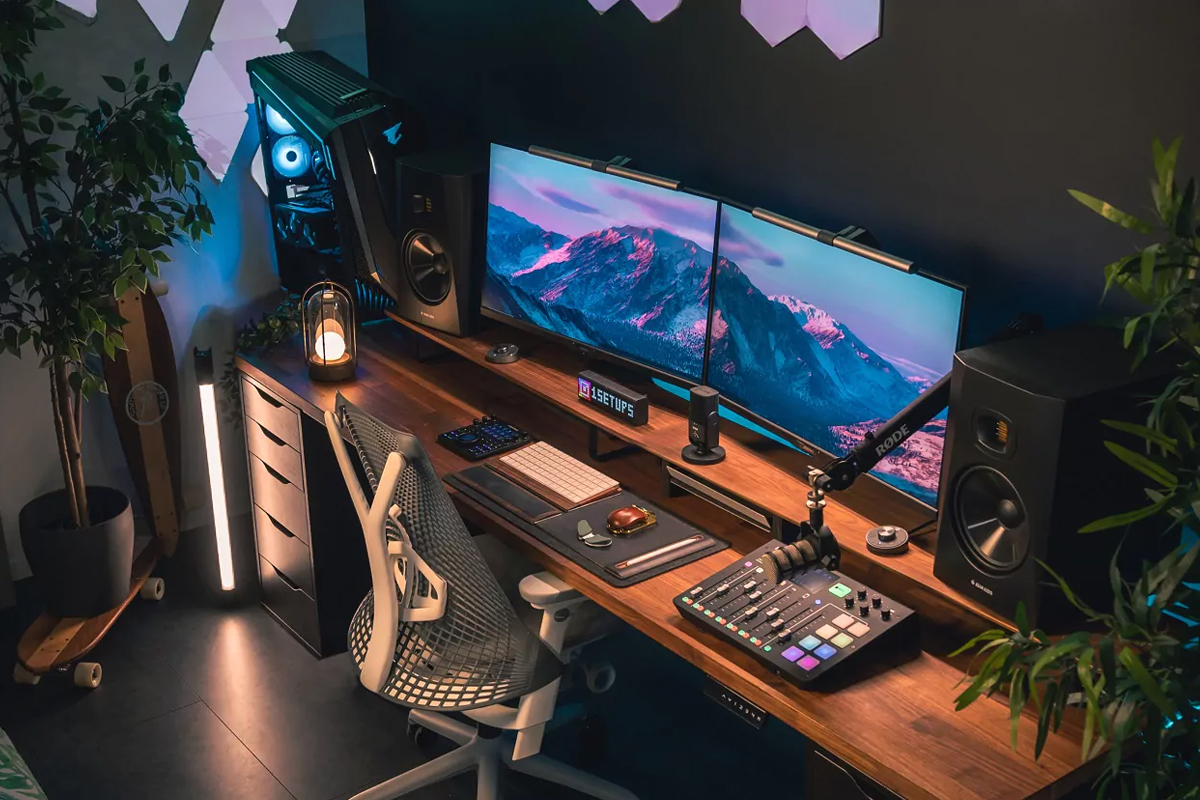
Read our full Buying Guide to learn everything you need to know before choosing your studio monitors — and then come hear them for yourself.
Experience the Sound — Not Just the Specs
No article can replace the experience of actually hearing a pair of monitors in person. At the Athens Pro Audio showroom, you can listen, compare, and feel how different models respond in real-world studio conditions. Our expert team will guide you through the process — helping you choose the monitors that fit your room, your workflow, and your budget. Because when it comes to your music, you deserve nothing less than the truest reflection of your sound.
AthensProAudio Team ©
Recent Articles
-
![AWOL Vision Aetherion MAX - Real cinema display!]()
AWOL Vision Aetherion MAX - Real cinema display!
-
![Cartridge or Phono Stage: Which Should You Upgrade First!]()
Cartridge or Phono Stage: Which Should You Upgrade First!
-
![Focal Diva Alta Utopia – When High-End Audio Stops Being Complicated.]()
Focal Diva Alta Utopia – When High-End Audio Stops Being Complicated.
-
![Leica Cine Compact 1 - A New Level of Freedom in Home Cinema.]()
Leica Cine Compact 1 - A New Level of Freedom in Home Cinema.
-
![Focal Mu-so Hekla – The new era of all-in-one sound by Focal & Naim.]()
Focal Mu-so Hekla – The new era of all-in-one sound by Focal & Naim.
-
![Audeze Maxwell 2 – High-Fidelity Sound in Gaming]()
Audeze Maxwell 2 – High-Fidelity Sound in Gaming
-
![7+1 smart ways to truly upgrade your sound.]()
7+1 smart ways to truly upgrade your sound.
-
![Neumann M 50 – From the 20th Century to the Present Day.]()
Neumann M 50 – From the 20th Century to the Present Day.
-
![Fender Studio Pro: The Next Day of Studio One Is Here!]()
Fender Studio Pro: The Next Day of Studio One Is Here!
-
![Naim New Classic 300 Series - Redefining Your Very Own Legacy.]()
Naim New Classic 300 Series - Redefining Your Very Own Legacy.
-
![HiFi Rose RS130 - The Art of Digital Sound!]()
HiFi Rose RS130 - The Art of Digital Sound!
-
![Open Day - Christmas Dream of Sound | Focal Powered by Naim Athens!]()
Open Day - Christmas Dream of Sound | Focal Powered by Naim Athens!


Follow us on Social Media
Don't miss out on new products and events by Athens Pro Audio.




